"Easy Wedding Script: Simple & Personalizable Guide"
Planning a simple yet meaningful wedding ceremony? A well-crafted script can help ensure your special day runs smoothly and reflects your unique bond. Here's a comprehensive guide to creating a simple yet heartfelt wedding script, optimized for search engines and written in a human-like tone.
Understanding Your Wedding Script
A wedding script is your ceremony's roadmap, guiding you, your officiant, and your guests through the event. It should be simple, personal, and reflective of your relationship. Here's how to create one that's perfect for you.
Know Your Ceremony's Structure
Before you start writing, understand the basic structure of a wedding ceremony:


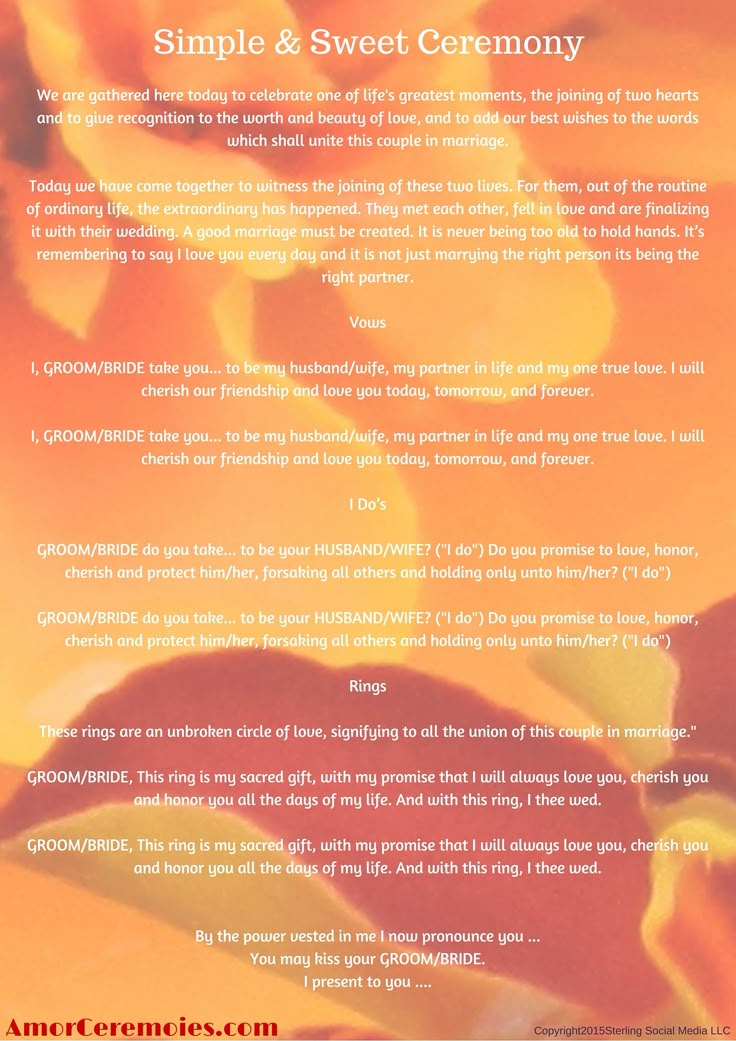
- Processional (entrance of wedding party and bride)
- Welcome/Introduction
- Readings/Poems
- Vows
- Ring Exchange
- Declaration of Marriage
- Recessional (exit of newlyweds and wedding party)
Crafting Your Simple Wedding Script
1. The Processional
The processional sets the tone for your ceremony. For a simple wedding, consider a soloist singing a favorite song or a family member playing an instrument. Your officiant can welcome guests and introduce the processional.
Example: "Ladies and gentlemen, please rise and welcome the bridal party. The bride will be escorted down the aisle by her father."


2. Welcome/Introduction
Your officiant should welcome guests, introduce themselves, and briefly explain the ceremony's purpose and structure. Keep it short and sweet.
Example: "Hello everyone, I'm [Officiant's Name], and I'll be presiding over today's ceremony. We're here to celebrate the union of [Bride's Name] and [Groom's Name]."
3. Readings/Poems
Incorporate readings or poems that resonate with you as a couple. They can be religious, secular, or personal. Keep it to one or two to maintain a simple ceremony.


Example: "[Officiant] reads 'Love is not just looking at each other, it's looking in the same direction.' - Antoine de Saint-Exupéry
4. Vows
Vows are the heart of your ceremony. They can be traditional, modern, or a mix of both. Make them personal and heartfelt, but keep them concise for a simple wedding.
Example: "[Bride's Name], I promise to love, honor, and cherish you, through joy and sorrow, in sickness and in health, for all the days of my life."


5. Ring Exchange
The ring exchange symbolizes your commitment. Your officiant will guide you through this part, so include their lines in your script.
Example: "[Officiant] says, 'Please repeat after me: With this ring, I thee wed, and with it, I bestow upon you all the treasures of my heart.'"
6. Declaration of Marriage
After the ring exchange, your officiant will declare you married. This is the climax of your ceremony, so make it memorable.
Example: "[Officiant] says, 'By the power vested in me, I now pronounce you husband and wife. You may kiss the bride!'"
7. Recessional
The recessional marks the end of your ceremony. It's a joyous moment, so choose lively music to celebrate your new union.
Example: "[Officiant] says, 'Ladies and gentlemen, please rise and join me in congratulating Mr. and Mrs. [Last Name]!'"
Tips for a Simple Yet Meaningful Wedding Script
Here are some final tips to help you craft the perfect simple wedding script:
- Keep it concise - aim for 15-20 minutes of ceremony time.
- Make it personal - include elements that reflect your relationship.
- Proofread - ensure your script is free of errors and easy to follow.
- Practice - rehearse your script with your officiant and wedding party.
Creating a simple wedding script is an exciting task that allows you to infuse your unique personalities into your ceremony. By following this guide, you'll craft a heartfelt and memorable celebration of your love.
Related Articles

"Simple, Non-Religious Wedding Ceremony Script: Easy & Personal"
Crafting a Simple, Heartfelt Non-Religious Wedding Ceremony Script Planning a wedding ceremony that reflects your unique bond and personal values can be an...

"Easy-to-Decorate Wedding Cake Ideas: Simple & Stunning"
In the whirlwind of wedding planning, one task that often strikes fear into the hearts of couples is decorating the wedding cake. But what if we told you it...

"Design Your Perfect Wedding Seating Chart: Easy Diagram Guide"
Planning a wedding involves countless details, and one of the most crucial yet often overlooked aspects is the seating chart. A well-designed wedding seating...

"Easy DIY Church Wedding Decorations: Simple & Budget-Friendly Ideas"
Create a Magical Atmosphere: DIY Simple Church Wedding Decorations Your wedding day is a special occasion that deserves a unique and personalized touch. While...

"Affordable Wedding Ring Payment Plans: Your Guide to Easy Financing"
Affordable Luxury: Exploring Payment Plans for Wedding Rings Your wedding ring is a symbol of your love and commitment, a piece of jewelry that you'll wear...

"Easy & Chic: Simple Wedding Bouquet Ideas for Your Big Day"
Elevate Your Special Day with Simple yet Stunning Wedding Bouquet Ideas Your wedding day is a culmination of your unique style and love story. One of the most...